
Sims Safety Wear is a Occupational safety and health establishment in Durban, KwaZulu-Natal, South Africa
Sims Safety Wear – Occupational Safety and Health (Durban, KwaZulu-Natal)
Sims Safety Wear is a Durban-based manufacturer and supplier of personal protective equipment (PPE), safety wear and workwear. Established in 1988, the business emphasises its long-standing presence in the safety sector and its evolution into supplying a branded range of safety products alongside a broad offering of PPE. The company highlights that it operates as a BBEE Level 2 compliant entity, with ISO:9001:2008 and ISO:14001:2004 accreditations, signalling a commitment to quality management, environmental standards and continual improvement across its operations.
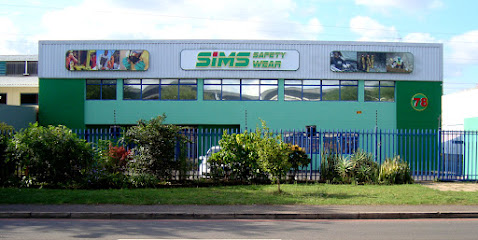
Core services include the manufacture and supply of PPE, safety wear and workwear. The enterprise markets its products to a diverse set of industries and sectors, positioning itself as capable of handling both standard PPE requirements and customised branding for corporate clothing. The organisation maintains a physical presence in Durban at Umgeni Business Park in KwaZulu-Natal, emphasising readiness to dispatch stock to regional and national destinations from a central depot. A retail shop and showroom are described as part of the offering, providing a broad stock of PPE, workwear, overalls, safety shoes and boots, with a full head-to-toe range all under one roof. Payment options include cash and debit/credit cards, suggesting a convenient customer experience for walk-in purchasers as well as business clients.
The company also advertises a custom branding service for workwear and corporate clothing, offering screen printing or embroidery. This service enables organisations to incorporate branding directly onto garments, supporting market recognition and uniformity across employee apparel. The combination of local stockholding, a showroom, and branding capabilities indicates a focus on responsive service for both immediate needs and longer-term procurement projects.
Typical job types and industries referenced in the available information include mechanical, petrochemical, marine, safety suppliers, engineering motor, government, mining, manufacturing, construction and broader industrial sectors. These categories suggest that the business aims to serve a wide range of high-risk workplaces where PPE and durable workwear are essential. The emphasis on in-house knitting capabilities for gloves and the description of state-of-the-art, computerised knitting machinery point to a capability for product development and quality control within the manufacturing process.
How requests usually work
From the information provided, customers can expect a straightforward process centred around stock availability and regional distribution. The depot is stated to have the capacity to stock large quantities and to dispatch goods to any region of South Africa. A retail showroom enables immediate purchase, while the branding service requires customer engagement to determine branding requirements and garment specifications. The combination of both retail and manufacturing capabilities implies a workflow where clients can discuss needs, select items from stocked ranges, and arrange branding either on existing garments or as part of a broader order.
Practical tips for customers
- Visit the Durban showroom to inspect the range of PPE, workwear, safety shoes and boots in person, and to obtain immediate pricing guidance.
- Ask about branding options early in the process to align design, lead times and cost with procurement plans.
- Confirm stock availability for high-demand items and discuss bulk-dispatch timelines if a large order is required.
- Take advantage of the local depot’s regional delivery capability to plan logistics for nationwide projects.
- Inquire about the after-sales aspects, such as warranties on PPE and any on-site support for custom orders or fittings.
Customer experiences
Several visitors have highlighted positive aspects of the service related to knowledge and quality. A reviewer noted the knowledgeable help and assistance and described the safety wear as high quality that is not readily available elsewhere. This reflects a view that the establishment provides expert guidance alongside dependable products. It is useful for prospective customers to consider both the quality of the PPE and the level of product knowledge available at the point of sale, particularly for organisations seeking compliant and practical safety solutions.
As with many service-oriented purchases, experiences can vary. Some feedback references mixed experiences in terms of communication or responsiveness, underscoring the importance of clear initial discussions about product specifications, pricing, and lead times to ensure alignment with project requirements.
Location and hours
The business operates from Durban, Umgeni Business Park in KwaZulu-Natal, serving clients across South Africa from its main depot. While specific opening hours are not listed in the available material, the presence of a retail showroom and a depot indicates opportunities for both in-person purchasing and professional consultations during standard business hours.
Durban
KwaZulu-Natal
South Africa
Sorry, no records were found. Please adjust your search criteria and try again.
Sorry, unable to load the Maps API.
Occupational safety and health services in Durban, KwaZulu-Natal
In Durban, KwaZulu-Natal, stakeholders across industry sectors rely on occupational safety and health (OSH) services to manage risks, protect workers, and maintain compliant operations. The service landscape typically encompasses assessments, practical programmes, and ongoing oversight designed to fit local conditions, workforce demographics, and the environmental context of a busy port city with substantial manufacturing, logistics, and construction activity.
Core offerings usually include risk assessments and method statements, which identify hazards, evaluate potential consequences, and propose controls aligned with legal requirements. Practical hazard control extends from engineering and administrative measures to appropriate personal protective equipment (PPE) recommendations. In Durban’s climate and industrial mix, emphasis is often placed on heat stress prevention, fatigue management, noise control, chemical safety, and safe handling of hazardous substances.
Health surveillance and medical monitoring are commonly provided or arranged as part of an OSH programme. This covers baseline and periodic medical assessments, audiometric testing for workers exposed to noise, vision screening, respiratory function tests, and immunisation campaigns where relevant. Such services aim to detect early signs of work-related ill health and to inform adjustments to duties, environments, or scheduling where necessary.
Consultants and service providers typically deliver training and education to enhance safety culture. Training topics may include emergency preparedness, first aid, incident reporting and investigation, lockout/tagout procedures, manual handling techniques, and contractor management. The emphasis is on practical, site-specific guidance that can be implemented within existing processes and production cycles. Many providers tailor programmes to reflect Durban’s regulatory expectations and the realities of local workplaces.
Incident investigation and near-miss analysis are standard components, helping organisations understand root causes, verify corrective actions, and learn from events without duplicating past mistakes. Follow-up audits or reassessments ensure that controls remain effective and aligned with any changes in processes, equipment, or regulation. Compliance support often includes document management, safety policy development, and assistance with risk-based annual reviews.
Contractor safety and site management hold particular relevance in Durban, where construction and facilities work intertwine with ongoing operations. Services commonly cover contractor onboarding, risk assessment for external teams, permit-to-work systems, and daily site hygiene and emergency accessibility checks. Collaboration with property managers, port authorities, and industrial tenants is frequently required to maintain orderly and safe sites across mixed-use environments.
Practical considerations for organisations operating in KwaZulu-Natal include weather-related risks such as heavy rainfall and humidity, which can affect slip resistance, electrical safety, and maintenance scheduling. Local workplaces may also need to address urban transport constraints, shift patterns, and resource availability for training and health programmes. A robust OSH approach in Durban typically integrates risk controls with straightforward monitoring tools and management systems that support ongoing improvement.
Customers can expect a methodical, service-driven approach characterised by clear problem definition, practical risk reduction plans, and transparent reporting. OSH providers in the region aim to align with national legislation governing occupational health and safety, while incorporating regional enforcement expectations and best practices suited to Durban’s industrial profile. By combining assessment, education, health monitoring, and proactive incident response, these services help organisations safeguard workers and sustain productive operations within KwaZulu-Natal.
- Risk assessments and control planning
- Health surveillance and medical monitoring
- OSHA-related training and competency development
- Incident investigation and corrective action tracking
- Contractor safety and site management
- Policy development, audits, and compliance documentation