
Omni Fire is a Fire alarm supplier establishment in Tsolwana Local Municipality, Eastern Cape, South Africa
Eastern Cape
South Africa
Sorry, no records were found. Please adjust your search criteria and try again.
Sorry, unable to load the Maps API.
Fire Alarm Supplier Services in Tsolwana Local Municipality
In the Eastern Cape, fire alarm supplier services within the Tsolwana Local Municipality region are understood to cover a broad spectrum of solutions designed to protect commercial, industrial, and public premises. Providers typically operate as a bridge between manufacturers of fire detection systems and the end users who require reliable protection against fire hazards. The emphasis is on offering systems that can detect, alert, and help suppress fires while meeting local regulatory expectations and industry best practices.
Clients can expect a consultative approach that begins with an assessment of the site characteristics, including building use, occupancy, compartmentalisation, and potential fire load. From there, procurement and installation plans are developed to address both safety objectives and practical considerations such as maintenance access, power supply reliability, and the resilience of communication pathways. Fire alarm suppliers in this region often collaborate with electrical contractors to ensure seamless integration with existing infrastructure and adherence to relevant standards.
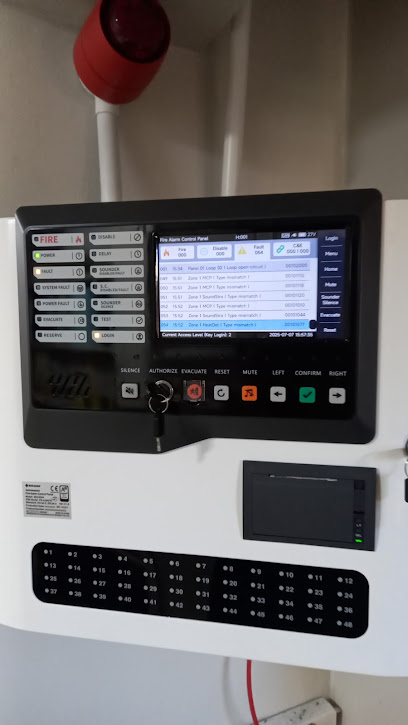
Common offerings encompass several core components. Fire detection devices, including smoke and heat detectors, are selected based on the specific environment—industrial facilities may require robust, high-sensitivity detectors, while smaller commercial sites might benefit from more compact units. Control panels serve as the central hub, coordinating alarm signals, annunciation, and interconnections with other safety systems. audible and visual alert devices, such as sirens and strobes, are included to ensure clear warning for occupants. In addition, systems commonly feature manual call points to enable immediate notification by staff or visitors in the event of a recognised risk.
Maintenance and servicing are essential elements of any fire alarm solution. Regular inspections verify that detectors remain responsive, that power supplies and back-up batteries are reliable, and that system software or firmware is up to date where applicable. Suppliers frequently arrange service contracts that outline routine testing, fault tracing, and corrective actions. This commitment to ongoing care helps to sustain system integrity and minimise false alarms, which can disrupt operations and erode confidence in safety measures.
Typically, installation and commissioning processes are undertaken with attention to local building codes and fire safety regulations. This includes ensuring that audible alarms meet required sound levels for different occupancy types and that access control interfaces operate correctly with evacuation procedures. In some instances, the scope may extend to ancillary life safety features, such as voice alarm systems, emergency lighting integration, and automatic suppression systems, depending on project specifications and risk assessments.
Practical considerations for clients in Tsolwana Local Municipality involve availability, service response times, and compatibility with regional infrastructure. Suppliers may need to source equipment that tolerates regional climate conditions and operates reliably with the local electrical supply. Additionally, urbanising trends and commercial growth in the region can influence the scale and complexity of fire protection needs, prompting a preference for scalable systems that can adapt to evolving premises without requiring extensive redesigns.
Outcome expectations centre on reliable early warning, clear occupant notification, and a straightforward maintenance path. When selecting a fire alarm supplier, organisations typically consider factors such as demonstrated compliance with relevant standards, the breadth of product and service offerings, the ability to tailor solutions to specific premises, and the clarity of after-sales support. The overarching goal remains ensuring that, in the event of a fire, occupants have time to respond safely while property damage is minimised through effective detection and alarm dissemination.