
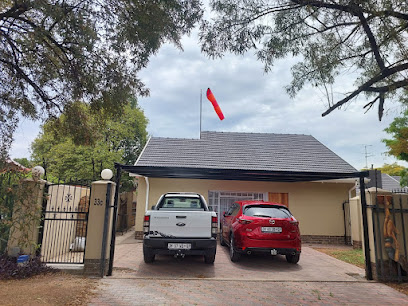
Air Safety Pilot Academy and Windsock Shop is a Housing complex establishment in Germiston, Gauteng, South Africa
Air Safety Pilot Academy and Windsock Shop: Services and Customer Experience in Germiston, Gauteng
Air Safety Pilot Academy and Windsock Shop presents a focused offering centred on windsock products, accessory components, and related equipment, primarily targeting operational environments where wind indicators are essential. The business operates through a catalogue of windsocks in various sizes, colours, and branding options, with an emphasis on practical visibility for outdoor operations. The product range includes several standard windsock configurations (Small, Medium, Large) in a variety of colour combinations, notably orange, yellow, red, and white, along with corresponding orange-and-white, yellow-and-white, and other branded iterations. Each Windsock entry specifies practical attributes such as diameter and length, and highlights the principal application context—ranging from factories and mines to heliports, marine settings, health and safety environments, and general aviation. In this way, the shop situates its offerings within sectors where wind information is critical to safety, site operations, and event planning.
The breadth of the catalogue suggests a dual focus: readily deployable standard models and specialised branded products. Several entries explicitly advertise branding capabilities, with statements such as “HAVE YOUR WINDSOCKS BRANDED WITH YOUR COMPANY LOGO!” (noting that such services are offered on a custom windsock line). This indicates an awareness of corporate needs for visibility, branding, and promotional impact in addition to functional performance. The presence of custom options shows a willingness to tailor products for marketing or identification purposes, rather than a purely utilitarian wind-reading tool.
Customer experience appears to be facilitated through a straightforward digital touchpoint: a simple E-Mail contact option is consistently listed on each product entry. The site’s structure implies that prospective buyers review product specifications online and then reach out via email for pricing, lead times, and ordering details. The emphasis is on a digital-first, self-serve approach to information, with email correspondence handling personalised quotations, branding arrangements, and order processing. The format suits customers who are evaluating specifications remotely and prefer written communication to confirm requirements before purchase.
Typical job types or use cases suggested by the catalogue align with common categories where windsocks are routinely employed. These include industrial facilities (factories, mines), outdoor sporting events, health and safety monitoring environments, and aviation-related contexts (general aviation, helipads). The distinct application labels for each windsock model serve as quick references to help buyers match the product to their operational setting. For example, larger models are associated with general aviation and heliport contexts, while smaller models are indicated for industrial sites and sporting venues. This alignment with standard industry uses supports a practical buying process for organisations seeking a ready-made visibility solution that can be deployed across multiple sites or events.
Practical tips for customers who are exploring Windsock Shop offerings include: carefully review the indicated application for each windsock to ensure the model aligns with the intended environment and regulatory or safety considerations; pay attention to the demonstrated diameter and length to ensure proper visibility and functional range in specific wind conditions; and consider branding options if corporate visibility is desirable or required for events, facilities, or advertising campaigns. When preparing to purchase, note that the site highlights posting information and contact by email, so having detailed project notes (site location, wind exposure, desired branding, and installation preferences) ready can streamline the quotation process.
For installation and installation-related supplies, the Windsock Shop also lists supporting hardware and components, including bearing rings, poles (standard and heavy-duty variants), and extendable portable poles. These ancillary items address the full installation workflow—from the underpinning support structures to the finishing wind indicator itself. Several product entries indicate that kits are designed for transport and easy on-site assembly, suggesting an emphasis on convenience for temporary or mobile deployments as well as permanent installations.
In summary, the Windsock Shop presents a practical, product-focused resource for organisations needing reliable wind indicators, with a clear emphasis on standard sizing, application-specific guidance, and branding options. The customer journey centres on online product review, followed by email-based bespoke quotations and order handling. For customers seeking efficient, immediately deployable solutions—or customised windsocks that carry a company imprint—the shop provides a straightforward pathway from selection to delivery, supported by a range of installation components designed to simplify on-site setup.
Germiston
Gauteng
South Africa
Sorry, no records were found. Please adjust your search criteria and try again.
Sorry, unable to load the Maps API.
Housing Complex Services in Germiston, Gauteng
In Germiston, a metropolitan area within Gauteng, housing complexes typically offer a range of on-site services designed to enhance security, maintenance, and community living. These services are shaped by the local urban environment, regulatory expectations, and the needs of residents who prioritise convenience, safety, and well-maintained surroundings. The expectations of tenants and owners often centre on predictable support, responsive upkeep, and clear management practices that help sustain property value and quality of life.
Management teams in Germiston housing complexes generally coordinate essential maintenance tasks, such as routine gardening, cleaning of shared spaces, and the timely repair of common area infrastructure. Residents can expect regular inspections, a system for reporting issues, and procedures for prioritising urgent maintenance work. While the exact programmes may vary between developments, the aim remains to keep shared facilities functional, accessible, and well-kept for all occupants.
Security is a fundamental consideration in many Germiston complexes. Site access controls, perimeter patrols, and well-lit communal areas are commonly prioritised to deter unauthorised entry and enhance resident peace of mind. Some complexes may employ security personnel, camera surveillance in common zones, and community safety initiatives that encourage neighbourly vigilance. It is advisable for prospective residents to understand the specific security measures in place, along with visitor procedures and any restrictions that apply to guests or vehicle access.
Shared facilities form another important aspect of housing complex life. Depending on the development, residents might enjoy amenities such as landscaped gardens, communal lounges or clubs, children’s play areas, and sometimes fitness facilities or small recreational spaces. The upkeep of these facilities is usually overseen by the management team, with clear guidelines about hours of use, bookings, and responsible behaviour to protect both safety and comfort for all residents.
Administrative and governance arrangements are typically transparent and resident-focused. Common elements include the preparation and execution of service levies or maintenance fees, the collection of these charges, and the allocation of funds for ongoing upkeep and emergencies. Clear communication channels are often established, detailing how residents can raise concerns, request repairs, or access essential information about the complex’s operations. When new residents move in, introductory material or welcome packs may outline rules, responsible use of facilities, and the organisation of regular meetings or community notices.
Practical considerations for living in Germiston housing complexes include the handling of waste management, parking policies, and noise management. The local climate, seasonal rains, and urban stormwater considerations can influence maintenance priorities and the timing of external works. Prospective occupants should verify whether the complex provides on-site management offices, the expected response times for faults, and any access limitations that might apply to contractors or visiting tradespeople. Understanding the status of insurance for common property and the responsibilities shared between residents and the management body helps minimise disputes and ensure smooth operations.
In terms of how services operate, the common model involves a clear separation between the management entity and individual unit owners or tenants. Routine repairs and routine maintenance requests are usually routed through an established process, with prioritisation given to urgent issues such as security or essential utilities. Routine communications are often published through notices or a communal information system, keeping residents informed about planned maintenance, upcoming renovations, and any changes to policies.
Overall, housing complex services in Germiston aim to provide safe, well-maintained living environments where 관리 and residents collaborate to preserve property standards. While the specifics vary by development, the shared focus remains on dependable upkeep, secure surroundings, and accessible facilities that support comfortable, community-oriented living in Gauteng.