
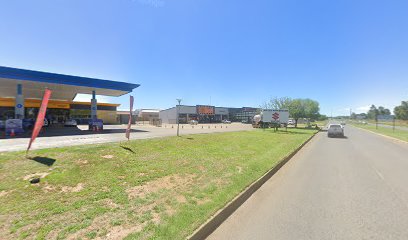
SAFETY STORE is a Fire protection system supplier establishment in Sasolburg, Free State, South Africa
Sasolburg
Free State
South Africa
Sorry, no records were found. Please adjust your search criteria and try again.
Sorry, unable to load the Maps API.
Fire protection system supplier services in Sasolburg, Free State
In Sasolburg, businesses and facilities rely on fire protection system suppliers to deliver comprehensive solutions that safeguard life and property. The service landscape commonly combines risk assessment, design, installation, commissioning and ongoing maintenance, all tailored to local climate, industrial activity and building types. From small commercial premises to large manufacturing sites, clients expect a practical, standards‑driven approach that integrates with existing infrastructure and operational workflows.
Typical offerings begin with a customised risk assessment to identify potential fire hazards, likely fire growth scenarios and the effectiveness of existing measures. This assessment informs the selection of appropriate fire protection technologies, such as detection and warning systems, passive fire safety measures, and active suppression solutions. In Sasolburg’s diverse industrial environment, this often includes considerations for petrol stations, automotive workshops, logistics facilities and chemical handling areas, each with distinct risk profiles and regulatory requirements.
Design and specification follow the initial assessment. Fire protection system suppliers in the region translate risk findings into practical system layouts that meet local codes and practical site constraints. The design process typically covers detection zones, alarm staging, fire suppressant capacities, alarm notification methods, and integration with building management systems where relevant. Emphasis is placed on reliability, ease of maintenance and the ability to operate under varying power conditions common to some sites in the Free State.
Installation and commissioning form a core part of the service offering. Qualified technicians install equipment in accordance with manufacturer guidelines and applicable regulations. After installation, commissioning procedures verify that all components operate as intended under fault conditions and that alarms, indicators and annunciators function correctly. The commissioning phase also confirms system interoperability with any existing infrastructure, ensuring a coherent response during an emergency.
Maintenance and testing are essential to sustain fire protection performance. Regular inspection schedules, routine servicing, and prompt replacement of worn or faulty components help prevent system failures. In Sasolburg, maintenance plans are often organised around site operations to minimise disruption while ensuring critical life-safety functions remain fully operational. Servicing may include routine hydrostatic testing of water-based systems, battery checks for alarm panels, and verification of manual call points and extinguishers. Documentation of all service activities supports compliance and future planning.
Emergency response and support services are commonly offered as part of the package. Clients may rely on remote monitoring, rapid on-site response, or scheduled on-site visits to address alarms, system faults or post-incident investigations. Where required, suppliers assist with remediation strategies, including temporary safety measures and adjustments to risk controls to restore safe operation quickly after an incident.
Practical considerations for selecting a supplier in Sasolburg include geographic proximity, service continuity, and the ability to work within the industrial mix found in the Free State. Clients often look for clear service level agreements, transparent pricing for inspections and repairs, and the availability of genuine replacement parts. Local experience with multi‑tenant facilities, industrial parks, and warehouse developments can enhance the ability to coordinate with other building management disciplines and contractor teams.
Customers can expect guidance on maintenance intervals, the potential need for system upgrades, and the alignment of fire protection strategies with broader safety objectives. While a supplier’s portfolio may feature a range of technologies—detection, suppression, containment and audible/visual warning—the best fit is determined by the specific risk for a site and the practicality of implementation within the Sasolburg environment. Overall, the emphasis remains on dependable protection, regulatory compliance and minimal disruption to daily operations.
- Risk assessment and system design
- Detection, alarm and notification systems
- Water, foam, foam‑water and gaseous suppression options
- Installation, commissioning and post‑installation support
- Routine maintenance, testing and documentation